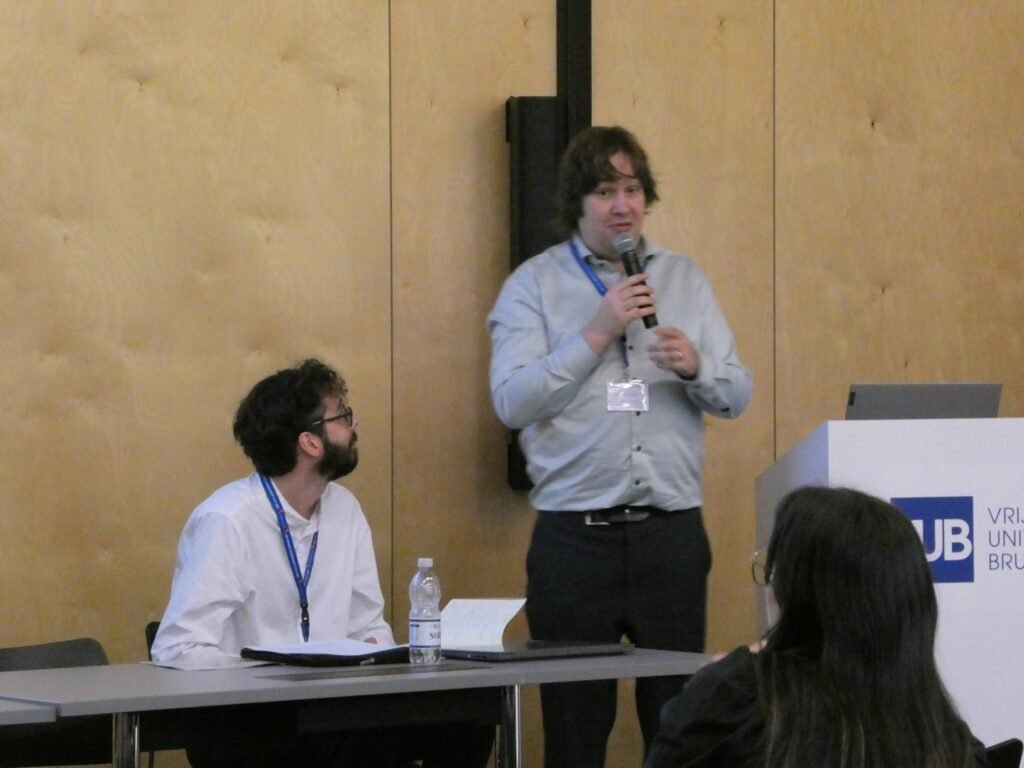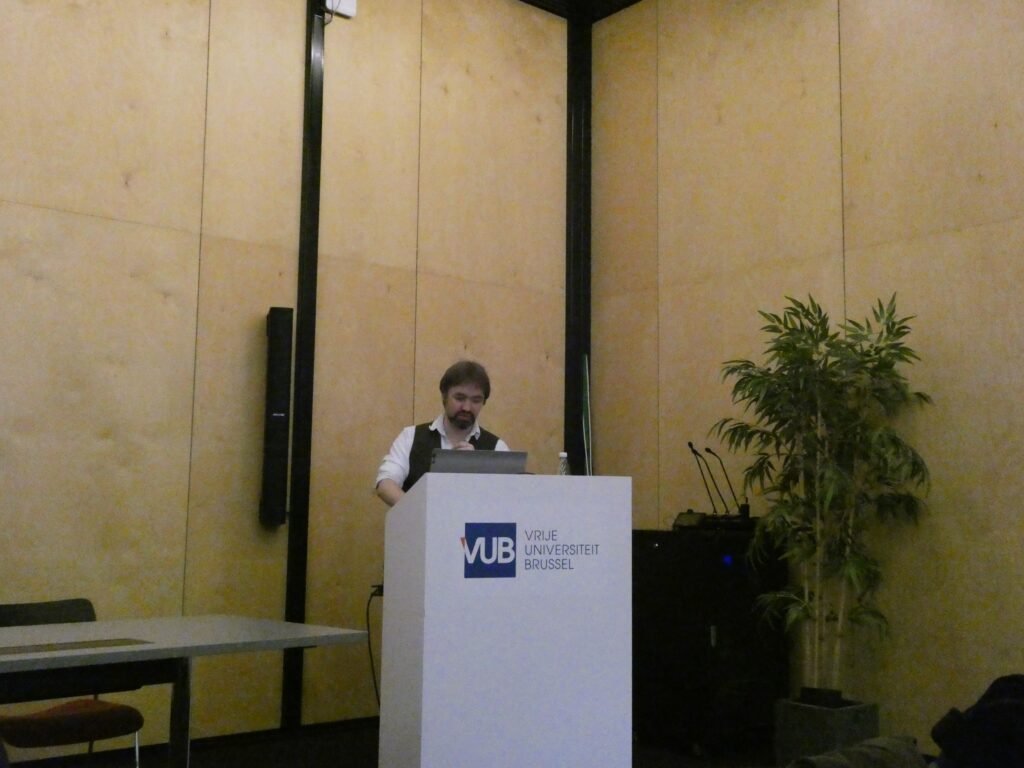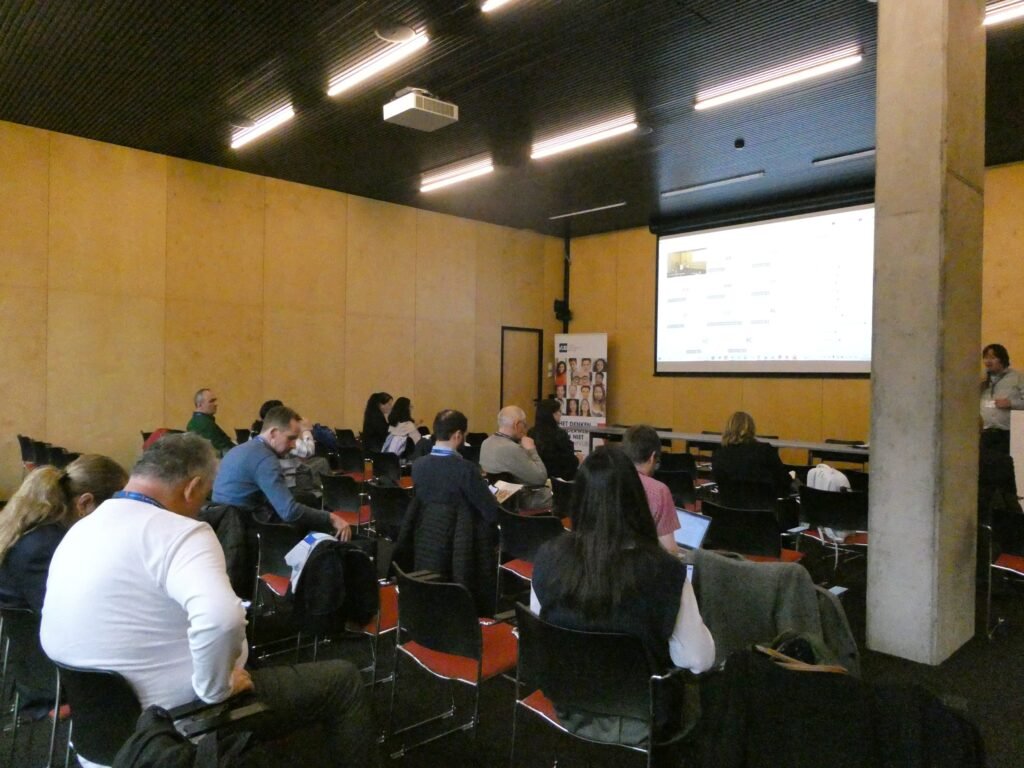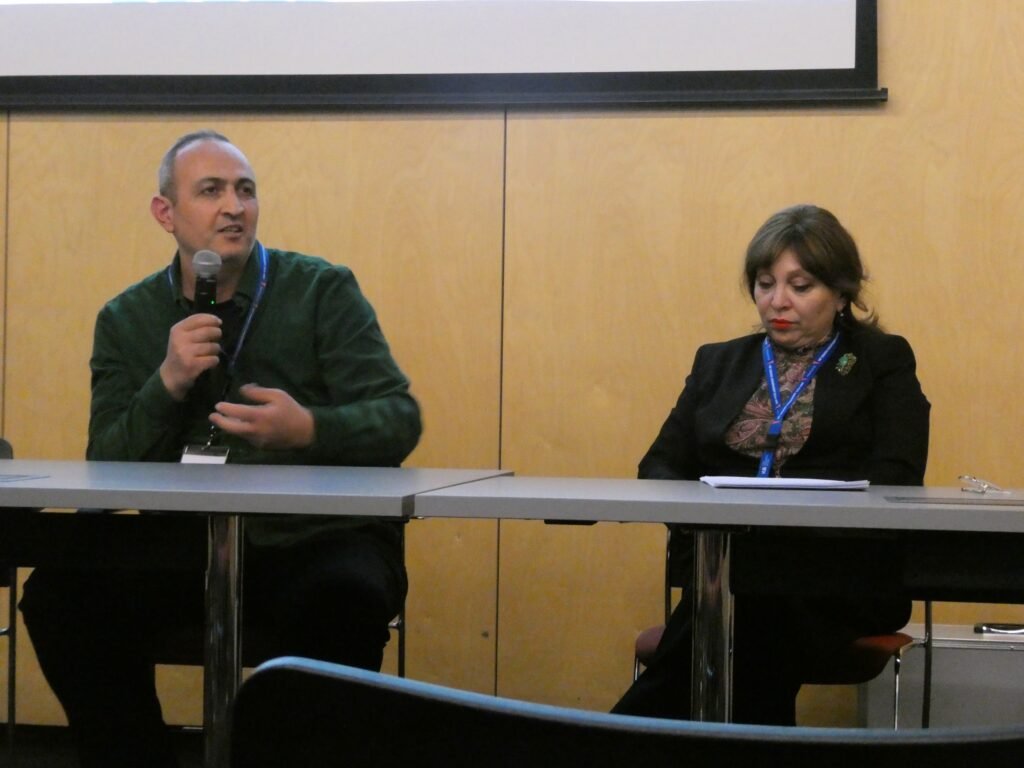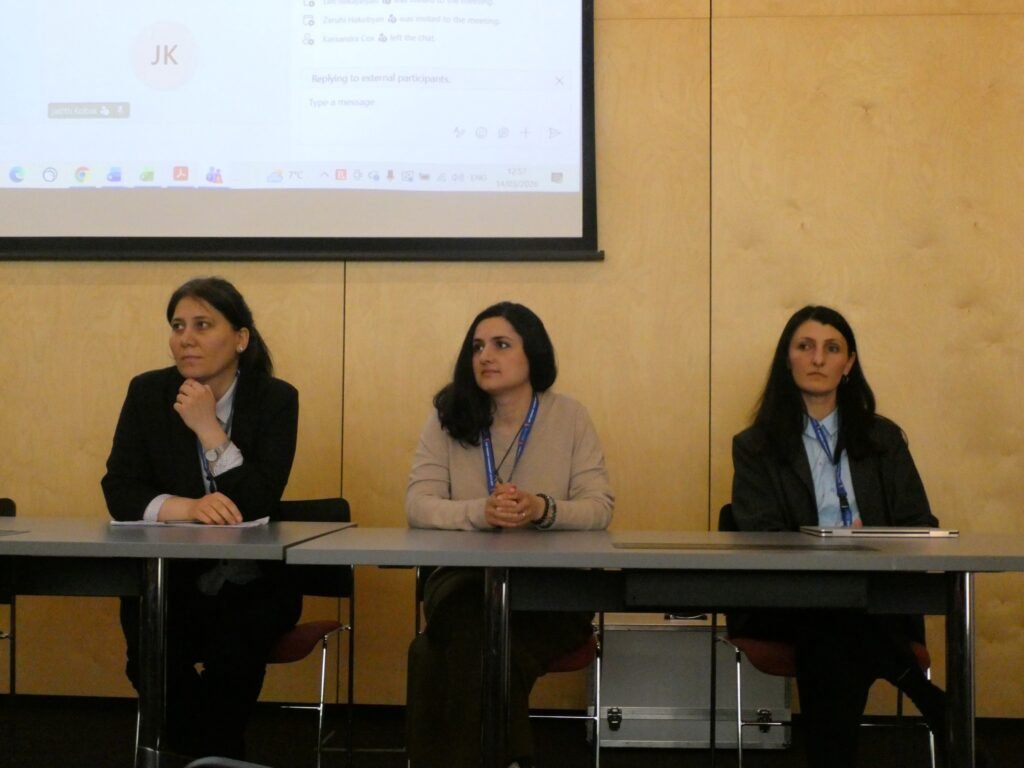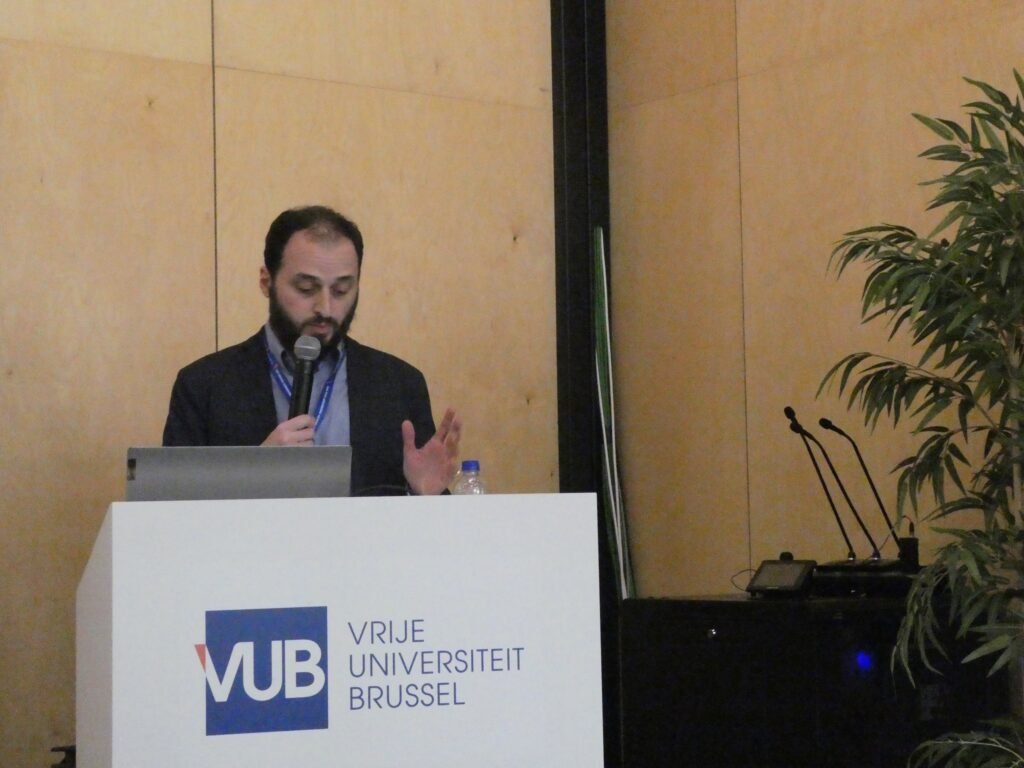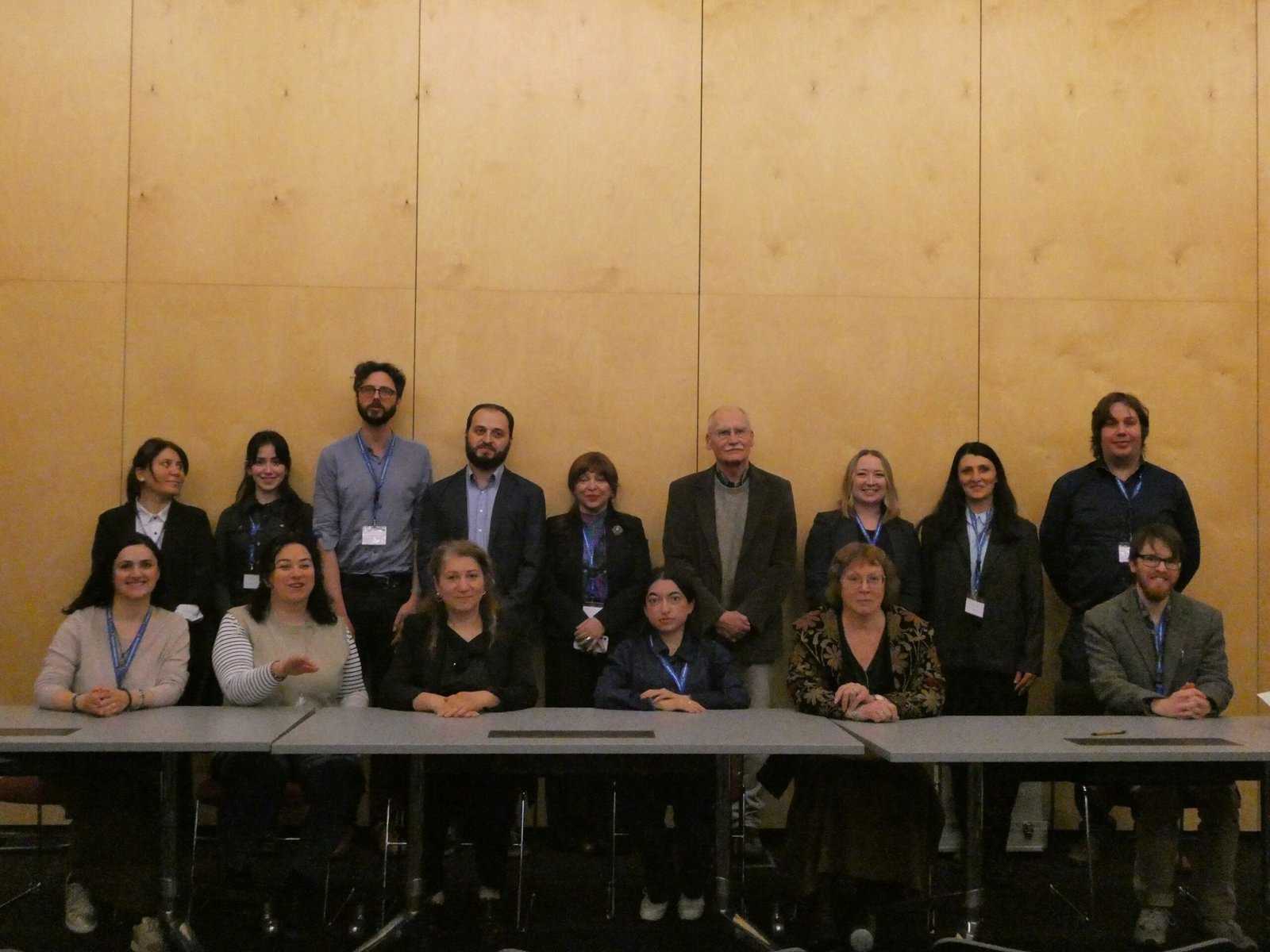
One week ago (13-14 March) the Medieval Caucasus Network had its first international conference! We gathered at the Vrije Universiteit Brussel for two days of hybrid format discussions.
The theme of the conference, led by Dr. John Latham-Sprinkle as its senior organiser, was studying non-elites in the medieval Caucasus. While exact definitions of a non-elite can vary significantly, a point discussed throughout the conference, the majority of people in the medieval Caucasus were clearly outside its socially and economically elite echelons. Non-elites represent most of human life: most of the food eaten and wine drunk, most of the stories spoken into a night sky and lost to time, most of the births and deaths and hopes and tears. Despite this, many of them are nearly invisible to us: lying outside the written record of states and chroniclers, and sometimes leaving little archaeological trace, the lives of even relatively wealthy specialist non-elites like merchants and craftspeople are rarely discoverable in the medieval period, let alone the much larger mass of agricultural labourers and pastoralists who made up most of the population. Working out how we can – and when we cannot – best reach the lives of these people was a topic this conference tackled in a wide variety of ways.
Across two days, we heard from twenty speakers representing institutions across nine countries (the UK, Switzerland, Armenia, Georgia, Russia, Belgium, Turkey, Egypt, Austria, and the Czech Republic). The range of talks was hugely varied, including reflections on how different farming patterns and soil types in the North Caucasus might tell a story of power and more or less resistance to it, Sasanian legal conditions and the difference between punishments for commoners and nobility, and the ways in which Neoplatonic philosophical discourses could be used either for or against elitist ideas of social structures.
These bits of information can seem sparse, but all contribute to building up our limited and vital picture of the non-elites of the medieval Caucasus. Approaching the topic from a wide array of angles can unearth individual vignettes that tell us more about the different possibilities of non-elite life: a non-elite Georgian saint having his plans for a monastery rejected by local nobles, the nurse of a local lord’s child setting up multiple stone inscriptions and paying for masses to be said at nearby Armenian monasteries, or the women who acted as patrons of mosques in Dagestan whose names are still inscribed there. Using source material ranging from building archaeology to the art-historical analysis of portrayals of dancing women in medieval manuscripts to reading about the conditions faced by non-noble scribes and recorded in Armenian colophons, many different, if small, windows can be opened on non-elite life.
Much of the way we discover these people is through their interactions with power. Sometimes this was directly and violently antagonistic, as non-elites (and perhaps former elites) found their religious practices suppressed by the Christianising rulers of Caucasian Albania, recorded only as demonised echoes in our remaining sources. More often it involved negotiating a way through a world not built for them – women trying to find protection under the legal codes of Cilician Armenia, or people around Lake Van in the early modern period navigating new stereotypes and discourses to make sense of a world in crisis. Some more mobile non-elites found ways to make themselves brokers and navigate between powers, with late medieval merchants forming crucial diplomatic channels between different potentates.
For those further from being visible to power, archaeological approaches are often key. We also heard about a range of vital projects working towards compiling new information we need to tackle these problems: cataloguing the Tapanakar grave marker stones of Armenia and their iconography, using innovative DNA and isotope analysis to see how much people in medieval Caucasian cemeteries had moved around from cradle to grave, and new settlement archaeology that is showing more about the types and shapes and forms of buildings around which medieval Caucasians lived their lives day by day.
This was all brought together with talks that focused on methodology and the ways we think about non-elites in the medieval past. This included a discussion of using structured data to catalogue, frame and test our own thinking about non-elite groups, and also our two keynotes by Irina Arzhantseva and Nik Matheou. Prof. Arzhantseva talked about the ways in which the archaeological indicators of wealth and success could vary greatly, with trade routes and landscapes potentially greatly influencing the formation of different social status patterns – but also with survivability greatly affecting what we can still see from those societies. Prof. Matheou meanwhile suggested that seeing the Caucasus as a shatter-zone, an area of potential friction to power, helps us understand the everyday resistance that most ordinary medieval Caucasians could have to those who sought to govern them, showing how even centres of power struggled to bring their immediate neighbouring communities to heel. He suggested, too, that rather than seeing the lack of written source material on non-elites as their failure to be remembered, we might see it as a success for many of the people we study – making their lives less legible to power, less easy to control, and determining more of their own social and economic fates far from the written page.
With that, one of the most important things that remained was to note that one of the most important things in this field of study is to keep talking and keep cooperating to build the best picture we can from our scattered evidence. We very much hope our conference contributed to that, and would like to thank all our speakers and attendees for their wonderful and thoughtful contributions over the two days. Thanks also to all of our sponsors: our hosts at VUB, the Past & Present Society, the National Association for Armenian Studies and Research, the FWO (Fonds voor Wetenschappelijk Onderzoek – Vlaanderen), the Catholic University of Louvain, the FNRS (Fonds de la recherche scientifique), and the University of Ghent.
Gallery